Population of Aligarh

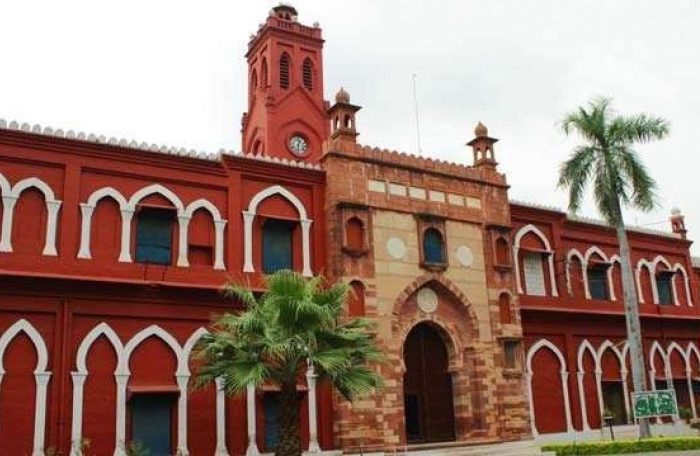
Aligarh is a major city in the Indian state of Uttar Pradesh. The city lies in western Uttar Pradesh, about 130 km southeast of Delhi. Aligarh is well known for its lock manufacturing industry and for being home to Aligarh Muslim University, one of India’s leading educational institutions.

As of the Census of India 2011, Aligarh was the 53rd most populous city in India and the 10th most populous city in Uttar Pradesh. The city is an important commercial, industrial, and educational center in western Uttar Pradesh.

According to the 2011 Census, the population of Aligarh city was 874,408 (8.74 lakh). Based on current growth trends, the estimated population of Aligarh in 2026 is around 12 lakh (1.2 million).

👉 Estimated Population of Aligarh in 2026: ~12 lakh

Census Quick Facts

The provisional data released by Census India 2011 shows that Aligarh had a population density of about 21,628 persons per sq. km. The municipal limits of the city cover an area of approximately 40.43 sq. km.

Aligarh CityCensus 2011
Total Population874,408 (8.74 Lakh)
Male Population461,772
Female Population412,636
Population Density21,628 per sq. km
Average Literacy Rate68.52%
Male Literacy73.89%
Female Literacy62.93%
Sex Ratio894
Child Sex Ratio885
Children (0–6 years)119,543

Source: Census 2011

Aligarh Historical Population

According to Census 2011, Aligarh recorded a population growth rate of 30.69% during 2001–2011, reflecting rapid urban expansion and migration from nearby rural areas. The city is expected to maintain steady growth, with an estimated growth rate of around 17% between 2011 and 2021.

Below is the historical population trend of Aligarh from 1901 to 2021.

YearPopulationActual ChangePercentage Change
190172,084
191166,344-5,740-7.96%
192166,9636190.93%
193183,87816,91525.26%
1941112,65528,77734.31%
1951141,61828,96325.71%
1961185,02043,40230.65%
1971252,31467,29436.37%
1981320,86168,54727.17%
1991480,520159,65949.76%
2001669,087188,56739.24%
2011874,408205,32130.69%
2021 (estimate)1,020,000145,59216.65%

Sources: Census 2011

Aligarh District Population

Aligarh district is an important district of western Uttar Pradesh. The district is widely known for its lock manufacturing industry and for the presence of Aligarh Muslim University, which attracts students from across India and abroad.

According to the 2011 Census, the population of Aligarh district was 3,673,889 (36.7 lakh).  It has a population density of about 1,000 persons per sq. km and recorded a population growth rate of 22.78% between 2001 and 2011.

The sex ratio in the district is 876 females per 1,000 males, while the literacy rate stands at 69.61%. About 33.13% of the district population lives in urban areas, and Scheduled Castes make up 20.56% of the population.

👉 Estimated Population of Aligarh District in 2026: ~43 lakh

Religions in Aligarh District

Religion distribution in Aligarh district according to the 2011 Census:

ReligionPercentage
Hinduism79.05%
Islam19.85%
Others / Not Stated1.10%

Languages in Aligarh District

The main languages spoken in the district are Hindi, Urdu, and Braj Bhasha.

LanguagePercentage
Hindi92.5%
Urdu5.34%
Braj Bhasha1.90%
Others0.22%

Source: Census 2011

Key Takeaways

  • The population of Aligarh city was 8.74 lakh in 2011 and is estimated to reach around 12 lakh by 2026.

  • Aligarh is located in western Uttar Pradesh, about 130 km from Delhi.

  • The city is famous for its lock manufacturing industry and for Aligarh Muslim University.

  • Aligarh had a high population density of 21,628 persons per sq. km in 2011.

  • The literacy rate of the city is 68.52%, with male literacy higher than female literacy.

  • The district population was about 36.7 lakh in 2011 and is estimated to reach around 43 lakh by 2026.

  • Hinduism and Islam are the two major religions in the district.

  • The main languages spoken are Hindi, Urdu, and Braj Bhasha.

Aligarh Population 2026 : City & District Census, Growth and Demographics

Rajeev Rana

Rajeev Rana is an independent writer and researcher with a strong interest in history, population studies, and demographic trends in India and North America. He has been writing on demography-related topics for over five years, focusing on census data, migration patterns, ethnicity, and regional population changes. While not a formally certified demographer, Rajeev closely follows official data releases from government sources, census authorities, and reputable research institutions. His work aims to present complex demographic information in a clear, accessible, and neutral manner for readers seeking factual insights and broader context. Rajeev contributes to multiple informational websites and has particular familiarity with demographic and regional trends in the Delhi NCR region. His writing is driven by curiosity, data interpretation, and a commitment to accuracy rather than advocacy or opinion