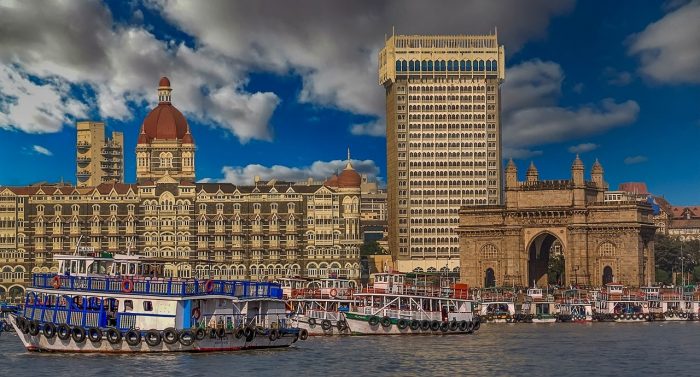
Population of Mumbai

Mumbai, the capital of Maharashtra, is India’s financial, commercial, and entertainment hub. It is one of the most densely populated urban regions in the world and consistently ranks among the largest metropolitan areas globally.

However, the population of Mumbai often creates confusion because the term “Mumbai” can refer to three different geographical definitions — and each has a different official population figure:

  1. Mumbai City (Greater Mumbai) – City Proper

  2. Mumbai City District & Mumbai Suburban District (Administrative Units)

  3. Mumbai Metropolitan Region (MMR) – Wider Metro Area

Understanding this distinction is important to get the correct population number.

Mumbai City Population (Greater Mumbai)

Mumbai City, officially known as Greater Mumbai, is governed by the Municipal Corporation of Greater Mumbai.

As per Census 2011:

👉 Population of Mumbai City (Greater Mumbai): 1,24,42,373 (1.25 Crore)

Estimated Population of Mumbai City in 2026:

👉 Around 1.45 Crore (14.5 million)

This figure represents the population living within the official municipal limits of Mumbai.

Mumbai’s Two Administrative Districts

Greater Mumbai is divided into two districts:

Mumbai City District

  • Covers South Mumbai

  • Area: 157 sq. km

  • Population (2011): 30.85 lakh

  • Surrounded by the Arabian Sea and Thane Creek

Mumbai Suburban District

  • Covers Western & Eastern Suburbs

  • Area: 369 sq. km

  • Population (2011): 93.56 lakh

  • One of the most densely populated districts in India

👉 Mumbai City District + Mumbai Suburban District together form Greater Mumbai (1.25 Crore in 2011).

Mumbai Metropolitan Region (MMR) Population

The Mumbai Metropolitan Region (MMR) is much larger than Mumbai City.

It includes Greater Mumbai plus surrounding urban bodies such as:

  • Thane

  • Navi Mumbai

  • Kalyan-Dombivli

  • Mira-Bhayandar

  • Ulhasnagar

  • Ambarnath

  • Badlapur

As per Census 2011:

👉 Mumbai Urban Agglomeration / MMR Population: 1,84,14,288 (1.84 Crore)

Current estimates suggest the MMR population has crossed 2.2 Crore, making it India’s second-largest metro region after Delhi NCR.

National & Global Position

Mumbai is:

  • India’s financial capital

  • One of the world’s largest metropolitan regions

  • Among the top 10 most populated urban areas globally

  • A major migration destination from across India

Quick Summary (For Clear Understanding)

  • Mumbai City (Greater Mumbai) → 1.25 Crore (2011)

  • Estimated Mumbai City (2026) → 1.45 Crore

  • Mumbai Metropolitan Region (2011) → 1.84 Crore

  • Current MMR Estimate → 2+ Crore


Religion in Mumbai

In the city of Mumbai, Hinduism is the most widely practiced religion, with 65.99% of the population following it. Islam is the second most popular religion, with approximately 20.65% of the population adhering to it. Christianity is followed by 3.27%, Jainism by 4.10%, Sikhism by 0.49%, and Buddhism by 4.85% of the population. Only around 0.26% of the population identifies as having “No Particular Religion,” while 0.40% follow an “Other Religion.”

Religion percentage in Mumbai

Religion Percentage
Hindu 65.99%
Muslims 20.65%
Buddhist 4.85%
Jain 4.10%
Christian 3.27%
Sikh 0,49%
Others 0.26%
Not Stated 0.40%
Mumbai Population 2026 | Religion in Mumbai City

Rajeev Rana

Rajeev Rana is an independent writer and researcher with a strong interest in history, population studies, and demographic trends in India and North America. He has been writing on demography-related topics for over five years, focusing on census data, migration patterns, ethnicity, and regional population changes. While not a formally certified demographer, Rajeev closely follows official data releases from government sources, census authorities, and reputable research institutions. His work aims to present complex demographic information in a clear, accessible, and neutral manner for readers seeking factual insights and broader context. Rajeev contributes to multiple informational websites and has particular familiarity with demographic and regional trends in the Delhi NCR region. His writing is driven by curiosity, data interpretation, and a commitment to accuracy rather than advocacy or opinion