
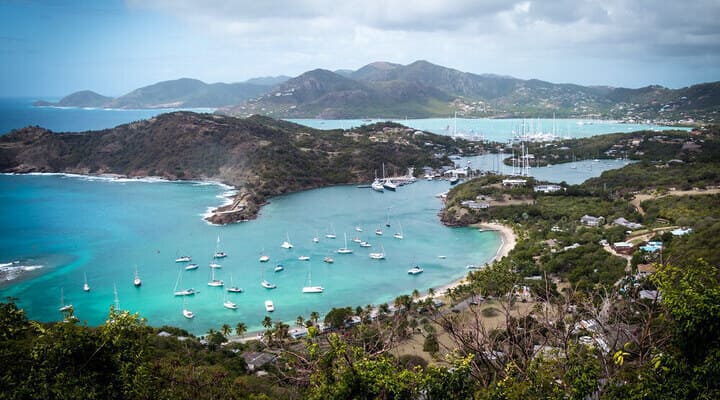
Caribbean Population 2026
According to the United Nations, In 1950 the population of the Caribbean Islands was estimated at around 17 million people. It reached 30 million in 1981 and 40 million in 2006. In 2020 Caribbean population was estimated to be 43 million. The Caribbean population is expected to reach around 47 million by 2050.
The total land area of the Caribbean islands is 225,970 sq. km and Population Density is 193 per sq. Km. Caribbeans include 14 independent island countries and 14 dependencies and other territories in three major archipelagos: the Greater Antilles, the Lesser Antilles, and the Lucayan Archipelago. As per the UN estimated Caribbean population in 2026 is 45,331,234 (45 million).
Caribbean population in 2025: 45 million or 4.5 crores
| Year | Estimated Population (Millions) |
|---|---|
| 1950 | 17 |
| 1981 | 30 |
| 2006 | 40 |
| 2020 | 43 |
| 2024 | 45 |
| 2050 | 47 |
Source: UN estimates
Caribbean Countries by Population
The Caribbean has a population of 45 million i.e. 0.55 % of the world’s population. Haiti (12 million), the Dominican Republic (11.5 million), and Cuba (11 million) remain the top three populous islands in the Caribbean.
Let’s have a look at the Country-wise population
| # | Countries/ Dependencies | Population 2026 |
| 1 | Haiti | 12,009,506 |
| 2 | Dominican Republic | 11,532,152 |
| 3 | Cuba | 11,152,631 |
| 4 | Puerto Rico* | 3,275,310 |
| 5 | Jamaica | 2,823,199 |
| 6 | Trinidad and Tobago | 1,540,943 |
| 7 | Bahamas | 417,790 |
| 8 | Guadeloupe* | 396,874 |
| 9 | Martinique* | 365,819 |
| 10 | Barbados | 282,581 |
| 11 | Curaçao | 193,836 |
| 12 | Saint Lucia | 181,310 |
| 13 | Grenada | 127,553 |
| 14 | Aruba* | 106,043 |
| 15 | Saint Vincent & Grenadines | 103,823 |
| 16 | U.S. Virgin Islands* | 97,326 |
| 17 | Antigua and Barbuda | 95,318 |
| 18 | Dominica | 73,685 |
| 19 | Cayman Islands* | 70,445 |
| 20 | Saint Kitts & Nevis | 47,935 |
| 21 | Turks and Caicos* | 46,797 |
| 22 | Sint Maarten | 44,403 |
| 23 | Saint Martin | 32,577 |
| 24 | British Virgin Islands* | 31,984 |
| 25 | Bonaire, Sint Eustatius and Saba (Caribbean Netherlands) | 27,399 |
| 26 | Anguilla* | 15,966 |
| 27 | Saint Barthelemy* | 11,043 |
| 28 | Montserrat* | 4,360 |
*Overseas Territories of Other Nations
source: https://uscanadainfo.com/caribbean-countries-by-population/
Overseas Territories of Other Nations in Caribbean
Caribbean Islands are a subregion of North America, surrounded by the North Atlantic Ocean and the Caribbean Sea & includes 14 independent island countries and 14 dependencies and other territories in three major archipelagos: the Greater Antilles, the Lesser Antilles, and the Lucayan Archipelago. The List of Dependent States are as follows
| # | Dependent States | Overseas Territories of |
| 1 | Anguilla | UK |
| 2 | Aruba | Netherlands |
| 3 | British Virgin Islands | U.K. |
| 4 | Caribbean Netherlands | Netherlands |
| 5 | Cayman Islands | U.K. |
| 6 | Curaçao | Netherlands |
| 7 | Martinique | France |
| 8 | Puerto Rico | U.S.A. |
| 9 | Saint Martin (French part) | France |
| 10 | Saint-Barthélemy | France |
| 11 | Sint Maarten (Dutch part) | Netherlands |
| 12 | Turks and Caicos | U.K. |
| 13 | U.S. Virgin Islands | U.S.A. |
List of Top Caribbean Countries by Land Area
Carribean Islands are part of North America or Latin America. Total Area of These Islands are 225,970 sq.km. There are total of 27 Countries ( 14 Sovereign Countries 13 Overseas Territory) in Caribbean Islands of which Cuba is the largest. The population density in Europe is 193 per Km2
Largest & Smallest Country by Area
| Areawise | Country | Area (sq.km) |
| Largest by Area | Cuba | 1,63,76,870 Km2 |
| Smallest by Area | Saint Kitts & Nevis | 260 Km2 |
Puerto Rico is largest Overseas Territory with an area of 8870 sq. km
Largest & Smallest Country by Density
| Density wise | Country | Density (P/Km2) |
| Highest Population Density | Barbados | 668 (p/km2) |
| least population Density | Dominica | 96 (p/km2) |
Sint Maarten is Overseas Territory with High density of 1261 person per sq. km
| # | Country | Land Area | Density |
| 1 | Cuba | 106,440 | 106 |
| 2 | Dominican Republic | 48,320 | 225 |
| 3 | Haiti | 27,560 | 414 |
| 4 | Jamaica | 10,830 | 273 |
| 5 | Bahamas | 10,010 | 39 |
| 6 | Puerto Rico* | 8,870 | 323 |
| 7 | Trinidad and Tobago | 5,130 | 273 |
| 8 | Guadeloupe | 1,690 | 237 |
| 9 | Martinique* | 1,060 | 354 |
| 10 | Turks and Caicos* | 950 | 41 |
| 11 | Dominica | 750 | 96 |
| 12 | Saint Lucia | 610 | 301 |
| 13 | Curaçao | 444 | 370 |
| 14 | Antigua and Barbuda | 440 | 223 |
| 15 | Barbados | 430 | 668 |
| 16 | St. Vincent & Grenadines | 390 | 284 |
| 17 | U.S. Virgin Islands* | 350 | 298 |
| 18 | Grenada | 340 | 331 |
| 19 | Caribbean Netherlands* | 328 | 80 |
| 20 | Saint Kitts & Nevis | 260 | 205 |
| 21 | Cayman Islands* | 240 | 274 |
| 22 | Aruba* | 180 | 593 |
| 23 | British Virgin Islands* | 150 | 202 |
| 24 | Anguilla* | 90 | 167 |
| 25 | Saint Martin (French part)* | 53 | 730 |
| 26 | Sint Maarten (Dutch part)* | 34 | 1,261 |
| 27 | Saint-Barthélemy* | 21 | 470 |
*Overseas Territories of Other Nations
Caribbean Countries by Fertility Rate & Median Age
The Total Fertility Rate (TFR) of Caribbean is 1.9
- Haiti is the country with the highest Fertility rate of 3
- Puerto Rico has the lowest rate i.e 1.2
The median age in Caribbean is 32 years.
- Cuba has the highest median age of 42 Years
- Haiti has the lowest rate of 24 years
| # | Country | Fertility Rate | Median age |
| 1 | Haiti | 3 | 24 |
| 2 | Dominican Republic | 2.4 | 28 |
| 3 | Guadeloupe | 2.2 | 44 |
| 4 | Grenada | 2.1 | 32 |
| 5 | Jamaica | 2 | 31 |
| 6 | Antigua and Barbuda | 2 | 34 |
| 7 | U.S. Virgin Islands* | 2 | 43 |
| 8 | Martinique* | 1.9 | 47 |
| 9 | St. Vincent & Grenadines | 1.9 | 33 |
| 10 | Aruba* | 1.9 | 41 |
| 11 | Bahamas | 1.8 | 32 |
| 12 | Curaçao | 1.8 | 42 |
| 13 | Trinidad and Tobago | 1.7 | 36 |
| 14 | Cuba | 1.6 | 42 |
| 15 | Barbados | 1.6 | 40 |
| 16 | Saint Lucia | 1.4 | 34 |
| 17 | Puerto Rico* | 1.2 | 44 |
| 18 | Turks and Caicos* | ||
| 19 | Dominica | ||
| 20 | Caribbean Netherlands* | ||
| 21 | Saint Kitts & Nevis | ||
| 22 | Cayman Islands* | ||
| 23 | British Virgin Islands* | ||
| 24 | Anguilla* | ||
| 25 | Saint Martin (French part)* | ||
| 26 | Sint Maarten (Dutch part)* | ||
| 27 | Saint-Barthélemy* |
*Overseas Territories of Other Nations