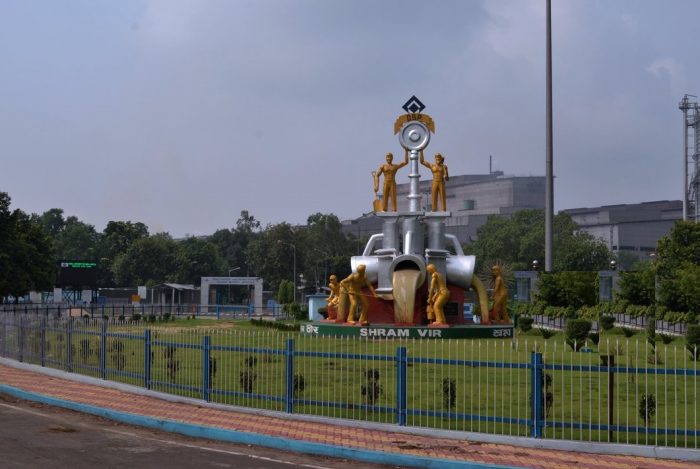
Durgapur is a city in the Paschim Bardhaman district in the Indian state of West Bengal. It is the third-largest city after Kolkata and Howrah in West Bengal. As per provisional reports of Census India, the population of Durgapur City in 2011 is 5,66,517 (5.66 Lakh) and the estimated population of Durgapur City in 2026 is 8 lakh
Census 2011 Details
The initial provisional data released by Census India 2011, shows that the density of Durgapur for 2011 is 3800 people per sq. km. Durgapur city administers area is 154 sq. km
Durgapur City
Census 2011
Total Population
566,517 (5.66 Lakhs)
Male Population
294,255
Female Population
272,262
Average Literacy (%)
86.20%
% of Male Literates
90.81%
% of Female Literates
80.84%
Sex Ratio
925
Child Sex Ratio
936
Children (0-6 years)
55,906
Sources: Census 2011
Durgapur Historical Population
As per Census 2011, Durgapur has a population growth rate of 14.82% during 2001-2011. It’s expected to have a population growth rate of 10% during 2011-2021.
Let’s look at population and percentage change from the Year 1961 to 2021.
Year
Population
Actual Change
Percentage Change
1961
41,696
–
–
1971
206,638
164,942
395.58%
1981
311,798
105,160
50.89%
1991
425,836
114,038
36.57%
2001
493,405
67,569
15.87%
2011
566,517
73,112
14.82%
2021 (estimated)
624,000
57,483
10.15%
Sources: Census 2011
Religion in Durgapur
According to Census of India 2011, Hinduism is the predominant religion in this city, followed by Islam, Christianity, Sikhism, Buddhism, Jainism, and others.
Religion Percentage in Durgapur
Hinduism – 91.63%
Islam- 6.34%
Other or not stated – 2/03%
Paschim Bardhaman District Population
As per the 2011 Census of India data Paschim Bardhaman district, after the bifurcation of Bardhaman district in 2016, had a total population of 2,882,031. Its estimated population in 2026 is 34 lakh.
Rajeev Rana is an independent writer and researcher with a strong interest in history, population studies, and demographic trends in India and North America. He has been writing on demography-related topics for over five years, focusing on census data, migration patterns, ethnicity, and regional population changes.
While not a formally certified demographer, Rajeev closely follows official data releases from government sources, census authorities, and reputable research institutions. His work aims to present complex demographic information in a clear, accessible, and neutral manner for readers seeking factual insights and broader context.
Rajeev contributes to multiple informational websites and has particular familiarity with demographic and regional trends in the Delhi NCR region. His writing is driven by curiosity, data interpretation, and a commitment to accuracy rather than advocacy or opinion