Amritsar is one of the most historic and culturally significant cities in the Indian state of Punjab. It is the second-most populous city in Punjab after Ludhiana and serves as a major religious and tourism hub of northern India.
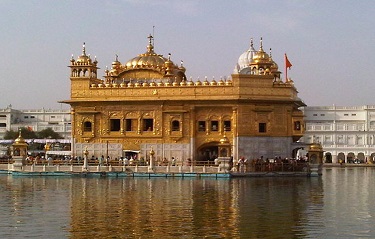
According to Census 2011, the population of Amritsar city was 1,132,383 (11.32 lakh). The city is internationally known as the home of the Golden Temple (Harmandir Sahib) and has been selected as a heritage city by the Government of India.
Based on past growth trends, the estimated population of Amritsar in 2026 is around 15 lakh, reflecting steady urban expansion.
👉 Projected Population of Amritsar (2026): ~15 lakh
Amritsar Demography (Census 2011)
| Amritsar City | Census 2011 |
|---|---|
| Total Population | 1,132,383 (11.32 lakh) |
| Male Population | 601,008 |
| Female Population | 531,375 |
| Population Density | 8,326 per sq. km |
| City Area | 136 sq. km |
Key Takeaways
-
Average Literacy Rate: 84.19%
-
Male Literacy: 86.90%
-
Female Literacy: 81.16%
-
Total Literates: 855,415
-
Sex Ratio: 884 females per 1000 males
-
Child Sex Ratio: 825
-
Children (0–6 years): 116,383 (10.28% of total population)
The literacy rate of Amritsar is above the national average. However, the sex ratio and child sex ratio remain lower than India’s average of 940 (Census 2011).
Amritsar Historical Population
Amritsar has experienced steady population growth over the past century. The city saw fluctuations during Partition (1951 decline), but post-independence urbanization and trade helped it expand significantly.
Between 2001 and 2011, Amritsar recorded a growth rate of 15.57%. Growth has moderated in recent years compared to earlier decades.
Let’s look at population & percentage change from 1901 to 2021.
| Year | Population | Actual Change | Percentage Change |
| 1901 | 162,429 | – | – |
| 1911 | 152,756 | -9,673 | -5.96% |
| 1921 | 160,218 | 7,462 | 4.88% |
| 1931 | 264,840 | 104,622 | 65.30% |
| 1941 | 391,010 | 126,170 | 47.64% |
| 1951 | 336,114 | -54,896 | -14.04% |
| 1961 | 390,055 | 53,941 | 16.05% |
| 1971 | 454,805 | 64,750 | 16.60% |
| 1981 | 594,844 | 140,039 | 30.79% |
| 1991 | 708,835 | 113,991 | 19.16% |
| 2001 | 979,801 | 270,966 | 38.23% |
| 2011 | 1,132,383 | 152,582 | 15.57% |
| 2021 (estimate) | 1,274,000 | 141,617 | 12.51% |
Sources: Census 2011
Amritsar District Population
Amritsar district is one of the 22 districts of Punjab, India. As of 2011, it is the second most populous district of Punjab, after Ludhiana, and had a population of 2,490,656 (24.90 Lakhs).
Estimated population of the Amritsar district in 2026 ~ 30 lakh or 3 million.
| Indicators | Value |
| Total Population | 2,490,656 |
| Male Population | 1,318,408 |
| Female Population | 1,172,248 |
| Average Literacy (%) | 76.27% |
| Sex Ratio | 889 |
| Child Sex Ratio | 826 |
Religion in Amritsar District (Census 2011)
Amritsar district has a Sikh majority population.
| Religion | Percentage |
|---|---|
| Sikhism | 68.94% |
| Hinduism | 27.74% |
| Christianity | 2.18% |
| Islam | 0.50% |
| Others / Not Stated | 0.64% |
Sikhism forms the dominant religion in the district, reflecting the city’s status as the spiritual center of the Sikh faith.