Population of Thiruvananthapuram

 > > India >>  States >>  Kerala

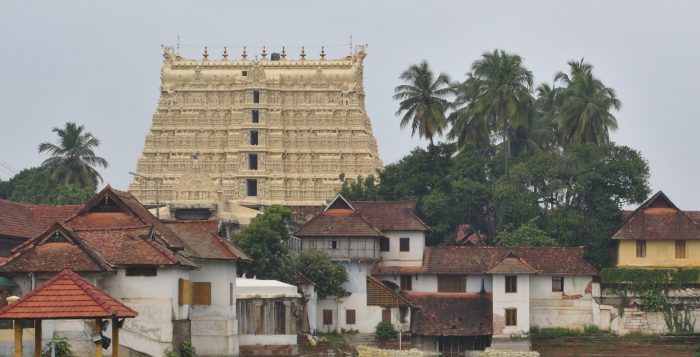
Thiruvananthapuram, formerly known as Trivandrum, is the capital city of the Indian state of Kerala. It is the administrative, political, and cultural center of Kerala and one of the fastest-growing urban regions in South India. The city is also a major hub for education, IT, research institutions, and tourism.

As per provisional reports of Census India, Thiruvananthapuram city had a population of 957,730 (9.57 lakh) in 2011. Over the last two decades, the city has witnessed steady population growth due to urban expansion and infrastructure development. Based on current trends, the population of Thiruvananthapuram is estimated to reach around 12 lakh by 2026.

👉 Projected Population of Thiruvananthapuram (2026): ~12 lakh
Census 2011: Thiruvananthapuram City at a Glance

ParticularsDetails
Total Population957,730 (9.57 lakh)
Male Population467,739
Female Population489,991
City Area215 sq. km
Population Density4,457 per sq. km
Literacy Rate84.13%
Sex Ratio1,040
Child Sex Ratio967
Children (0–6 years)64,566

Key Takeaways (2011 Census)

  • Thiruvananthapuram has a high female population, reflected in a strong sex ratio of 1,040.

  • The city shows steady urban growth with moderate population density.

  • Children aged 0–6 years formed about 6.7% of the total population.

  • Literacy levels remain strong compared to the national average.

Thiruvananthapuram Metropolitan Population

Thiruvananthapuram city is governed by the Municipal Corporation, which comes under the Thiruvananthapuram Metropolitan Region*.

ParticularsDetails
Total Population1,679,754 (16.79 lakh)
Male Population813,065
Female Population866,689
Literacy Rate94.20%
Sex Ratio1,062
Child Sex Ratio962

👉 Estimated Metro Population (2026): ~20 lakh

Thiruvananthapuram Historical population

As per Census 2011, Thiruvananthapuram has a population growth rate of 12.15% during 2001-2011.  At the start of the 20th century, Thiruvananthapuram’s population was under one lakh & saw a steady growth & reached over 1 million in 2021. Let’s look at population & percentage change from  Year 19o1 to 2021.

YearPopulationActual ChangePercentage Change
190157,882
191163,5615,6799.81%
192172,7849,22314.51%
193196,01623,23231.92%
1941128,36532,34933.69%
1951191,34362,97849.06%
1961297,819106,47655.65%
1971435,473137,65446.22%
1981520,12584,65219.44%
1991754,757234,63245.11%
2001846,47991,72212.15%
2011957,730111,25113.14%
2021 (estimate)1,075,000

Sources: Census 2011

Thiruvananthapuram District Population

Thiruvananthapuram District is the southernmost district in the Indian state of Kerala. It’s the second most populous district in Kerala after the Malappuram district. The district covers an area of 2,192 square kilometers. As per the census 2011, the Thiruvananthapuram district Population is 3,301,427 (33 Lakh)

👉Estimated District Population (2024): ~37 lakh

ParticularsDetails
Total Population3,301,427 (33 lakh)
Area2,192 sq. km
Density1,140 per sq. km
Literacy Rate71.92%
Sex Ratio875
Child Sex Ratio881


Thiruvananthapuram Population 2026 – City & District Census, Growth and Demographics

Rajeev Rana

Rajeev Rana is an independent writer and researcher with a strong interest in history, population studies, and demographic trends in India and North America. He has been writing on demography-related topics for over five years, focusing on census data, migration patterns, ethnicity, and regional population changes. While not a formally certified demographer, Rajeev closely follows official data releases from government sources, census authorities, and reputable research institutions. His work aims to present complex demographic information in a clear, accessible, and neutral manner for readers seeking factual insights and broader context. Rajeev contributes to multiple informational websites and has particular familiarity with demographic and regional trends in the Delhi NCR region. His writing is driven by curiosity, data interpretation, and a commitment to accuracy rather than advocacy or opinion

Leave a Reply