> > India >> States >> Uttar Pradesh
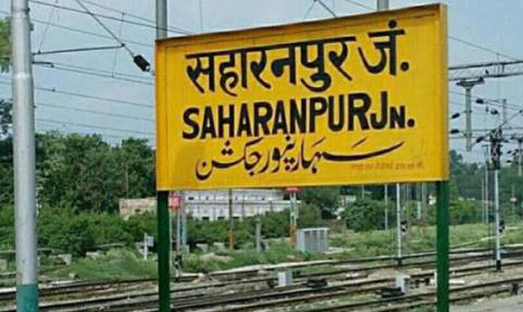
Saharanpur is a major city in the Indian state of Uttar Pradesh. The city serves as the administrative headquarters of the Saharanpur district and is located near the borders of Uttarakhand and Haryana. Saharanpur is known for its wood carving industry and agricultural trade. The city has also been selected under the Smart Cities Mission for infrastructure and urban development.
As per provisional reports of the Census of India, the population of Saharanpur city in 2011 was 705,478 (7.05 lakh). The estimated population of Saharanpur city in 2026 is around 10 lakh.
👉 Projected Population of Saharanpur in 2026 ~ 10 Lakh
Saharanpur City Census Quick Facts
The city covers an area of 46.74 sq. km and had a population density of 15,094 people per sq. km according to the 2011 census.
| Saharanpur City | Census 2011 |
|---|---|
| Total Population | 7,05,478 (7.05 Lakh) |
| Male Population | 3,71,740 |
| Female Population | 3,33,738 |
| Children (0–6 years) | 92,902 |
| Population Density | 15,094 per sq. km |
| Average Literacy Rate | 76.32% |
| Male Literacy | 80.37% |
| Female Literacy | 71.82% |
| Sex Ratio | 898 |
| Child Sex Ratio | 890 |
Saharanpur Historical Population
Saharanpur has experienced rapid population growth over the past century. According to Census data, the city recorded a 54.79% population growth between 2001 and 2011, one of the highest increases among major cities in western Uttar Pradesh.
Population growth slowed slightly in the following decade, with the city estimated to have grown by about 18% between 2011 and 2021.
Population Growth of Saharanpur City
| Year | Population | Actual Change | Percentage Change |
|---|---|---|---|
| 1901 | 66,254 | – | – |
| 1911 | 62,850 | -3,404 | -5.14% |
| 1921 | 62,261 | -589 | -0.94% |
| 1931 | 78,655 | 16,394 | 26.33% |
| 1941 | 105,622 | 26,967 | 34.29% |
| 1951 | 148,435 | 42,813 | 40.53% |
| 1961 | 185,213 | 36,778 | 24.78% |
| 1971 | 225,396 | 40,183 | 21.70% |
| 1981 | 295,355 | 69,959 | 31.04% |
| 1991 | 374,945 | 79,590 | 26.95% |
| 2001 | 455,754 | 80,809 | 21.55% |
| 2011 | 705,478 | 249,724 | 54.79% |
| 2021 (estimate) | 830,000 | 124,522 | 17.65% |
Source: Census 2011
Saharanpur District Population
Saharanpur district is the northernmost district of Uttar Pradesh. The district shares borders with the states of Haryana, Uttarakhand, and Himachal Pradesh, making it an important regional trade center.
According to the 2011 Census, Saharanpur district had a population of 3,466,382 (34.66 lakh). The district recorded a population growth rate of 19.59% between 2001 and 2011.
The estimated population of Saharanpur district in 2026 is around 40 lakh.
Saharanpur District Census 2011
| Saharanpur District | Census 2011 |
|---|---|
| Total Population | 3,466,382 |
| Male Population | 18,36,000 (approx.) |
| Female Population | 16,30,000 (approx.) |
| Population Density | 939 per sq. km |
| Average Literacy Rate | 72.03% |
| Sex Ratio | 887 |
| Urban Population | 30.77% |
| Scheduled Castes | 22.05% |
| Scheduled Tribes | 0.03% |
Religion in Saharanpur District
Religion in Saharanpur district is primarily dominated by Hinduism, followed by Islam. A small percentage of the population also follows Sikhism and other religions.
Religious Composition
| Religion | Percentage |
|---|---|
| Hinduism | 56.74% |
| Islam | 41.95% |
| Sikhism | 0.54% |
| Other / Not Stated | 0.77% |
In general, Hindus dominate rural areas, while Muslims form a significant share of the urban population in the district.
Languages Spoken in Saharanpur District
According to the 2011 Census, the primary languages spoken in Saharanpur district are Hindi and Urdu.
Language Distribution
| Language | Percentage |
|---|---|
| Hindi | 80.90% |
| Urdu | 18.57% |
| Others | ~0.53% |
Hindi is the dominant language used in administration, education, and daily communication, while Urdu is widely spoken among sections of the urban population.
Note: In many Indian cities, official municipal boundaries cover only the core urban area, so the reported city population may appear smaller than the actual urban population. In such cases, the district population often provides a better reflection of the broader urban region, as Census city limits and Urban Agglomeration (UA) definitions do not always capture the full functional city area.
Know more about Uttar Pradesh