
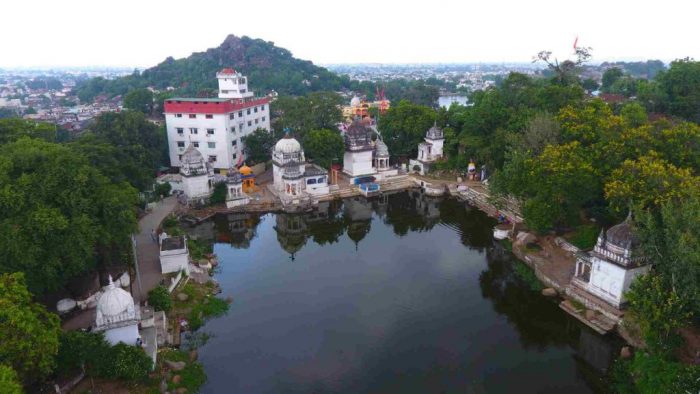
> > India >> States >> Madhya Pradesh
Jabalpur is one of the major cities in the Indian state of Madhya Pradesh. As per Census 2011, it is the fourth-largest city in the state and ranks among the important urban centers of central India. The city is well known for the Dhuandhar Falls and the Marble Rocks at Bhedaghat, making it a popular tourist destination.
According to Census 2011, Jabalpur had a population of 1,055,525 (10.55 lakh). The city has grown steadily due to its role as an administrative, educational, and commercial hub.
Based on recent demographic trends, the estimated population of Jabalpur in 2026 is around 12.50 lakh, indicating moderate urban expansion.
👉 Projected Population of Jabalpur (2026): ~12.50 Lakh
Jabalpur City Census 2011 Data
| Particulars | Census 2011 Data |
|---|---|
| Total Population | 1,055,525 |
| Male Population | 545,510 |
| Female Population | 510,015 |
| City Area | 129 sq. km |
| Population Density | 8,170 per sq. km |
| Average Literacy Rate | 87.39% |
| Male Literacy Rate | 90.78% |
| Female Literacy Rate | 83.77% |
| Sex Ratio | 935 |
| Child Sex Ratio | 904 |
| Children (0–6 years) | 111,425 |
Key Takeaways: Jabalpur City Population
Jabalpur had over 10.5 lakh residents in 2011, making it one of the largest cities in Madhya Pradesh.
The city maintains a high literacy rate of more than 87%.
Population density of over 8,000 persons per sq. km reflects high urban concentration.
The sex ratio of 935 is close to the national average.
Tourism, education, and administration play a major role in the city’s growth.
Jabalpur Historical Population
Jabalpur has experienced strong population growth since independence, especially between 1951 and 1981. In recent decades, the growth rate has slowed, showing signs of stable urban development.
Between 2001 and 2011, the city recorded a growth rate of about 10.94%, while growth during 2011–2021 remained moderate.
| Year | Population | Actual Change | Percentage Change |
|---|---|---|---|
| 1901 | 90,316 | — | — |
| 1911 | 100,651 | 10,335 | 11.44% |
| 1921 | 108,793 | 8,142 | 8.09% |
| 1931 | 104,317 | -4,476 | -4.11% |
| 1941 | 140,227 | 35,910 | 34.42% |
| 1951 | 203,659 | 63,432 | 45.24% |
| 1961 | 295,375 | 91,716 | 45.03% |
| 1971 | 457,741 | 162,366 | 54.97% |
| 1981 | 664,702 | 206,961 | 45.21% |
| 1991 | 762,533 | 97,831 | 14.72% |
| 2001 | 951,472 | 188,939 | 24.78% |
| 2011 | 1,055,525 | 104,053 | 10.94% |
| 2021 (Est.) | 1,140,000 | 84,475 | 8.00% |
Jabalpur District Population
Jabalpur District is one of the most important districts of Madhya Pradesh. It serves as a major administrative and economic center and supports the growth of Jabalpur city. As per Census 2011, Jabalpur District had a population of 2,463,289 (24.63 lakh), making it the second most populous district in the state after Indore. The district shows strong performance in education and urban development.
Based on recent trends, the estimated population of Jabalpur District in 2026 is around 29 lakh.
| Particulars | Census 2011 Data |
|---|---|
| Total Population | 2,463,289 |
| Male Population | 1,277,278 |
| Female Population | 1,186,011 |
| District Area | 5,198 sq. km |
| Population Density | 470 per sq. km |
| Average Literacy Rate | 81.07% |
| Sex Ratio | 929 |
| Child Sex Ratio | 923 |
Know more about Madhya Pradesh
Pingback:Police Stations in Jabalpur | Find Easy