
> > India >> States >> Jammu and Kashmir
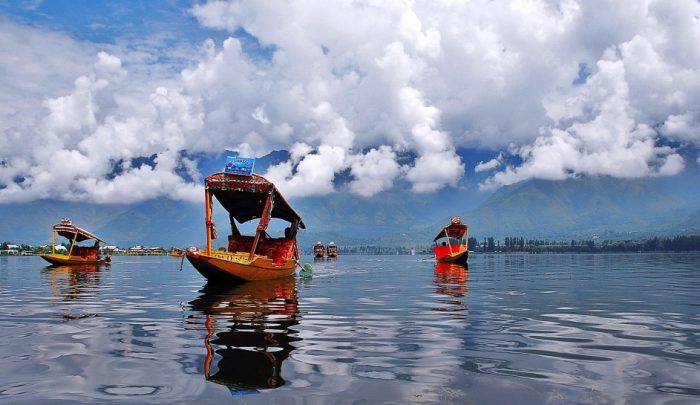
Srinagar is the largest city and the summer capital of Jammu and Kashmir. It is located in the scenic Kashmir Valley along the banks of the Jhelum River and is known for its lakes, gardens, and rich cultural heritage. Srinagar is also the northernmost major Indian city with a population exceeding 10 lakh.
As per the provisional Census 2011 reports, the population of Srinagar City was 11.18 lakh (1,180,570), making it the most populous urban center in the region.
With steady urban growth and expansion, the city continues to attract residents for education, trade, tourism, and administration.
👉 Estimated population of Srinagar in 2026: ~13.70 lakh
Census 2011 Key Facts
| Indicators | Value |
| Population | 1,180,570 |
| Male Population | 618,790 |
| Female Population | 561,780 |
| Srinagar Demography | 2011 Census |
| City Area | 278 sq. km |
| Density of Population | 4247 people per sq. km |
| Average Literacy (%) | 69.15%. |
| % of Male Literates | 75.87% |
| % of Female Literates | 61.81 % |
| Sex Ratio | 908 |
| Child Sex Ratio | 864 |
| Children (0-6 years) | 152,445 |
Source: Census 2011
📌 Key Takeaways – Srinagar
By 2026, Srinagar’s population is estimated to reach around 13.70 lakh, indicating steady urban growth from its 2011 level of 11.80 lakh.
With continued expansion over nearly 278 sq. km, the city is expected to remain densely populated, putting increasing pressure on housing, transport, and civic infrastructure.
As per Census 2011, the average literacy rate was 69.15%, with male literacy at 75.87% and female literacy at 61.81%, reflecting a noticeable gender gap in education.
The sex ratio stood at 908 females per 1,000 males, while the child sex ratio was 864, pointing towards demographic imbalance.
Children aged 0–6 years numbered over 1.52 lakh, forming nearly 13% of the population, showing a relatively young age structure.
Srinagar Historical Population
As per Census 2011, Srinagar recorded a population growth rate of 26.16% during 2001–2011. Based on recent trends, the city was expected to grow at around 14% between 2011 and 2021.
At the beginning of the 20th century, Srinagar had a population of about 1.22 lakh. It took nearly five decades for the population to double. However, after the 1950s, the city witnessed rapid urbanization and expansion. By 2001, its population had crossed 9 lakh, and it reached over 11 lakh by 2011.
Over the decades, Srinagar’s growth has been driven by administrative importance, tourism, education, and regional migration, making it the largest urban center in Jammu and Kashmir.
Population Growth (1901–2021)
| Year | Population | Actual Change | Percentage Change |
|---|---|---|---|
| 1901 | 122,618 | – | – |
| 1911 | 126,344 | 3,726 | 3.04% |
| 1921 | 141,735 | 15,391 | 12.18% |
| 1931 | 173,573 | 31,838 | 22.46% |
| 1941 | 207,787 | 34,214 | 19.71% |
| 1951 | 246,522 | 38,735 | 18.64% |
| 1961 | 285,257 | 38,735 | 15.71% |
| 1971 | 415,271 | 130,014 | 45.58% |
| 1981 | 594,775 | 179,504 | 43.23% |
| 1991 | – | – | – |
| 2001 | 935,764 | – | – |
| 2011 | 1,180,570 | 244,806 | 26.16% |
| 2021 (Est.) | 1,350,000 | 169,430 | 14.35% |
Source: Census 2011
Overall, Srinagar has shown steady long-term growth, with especially strong expansion after Independence, reflecting its increasing role as the political, economic, and cultural hub of the Kashmir Valley.
Know more about Jammu and Kashmir