
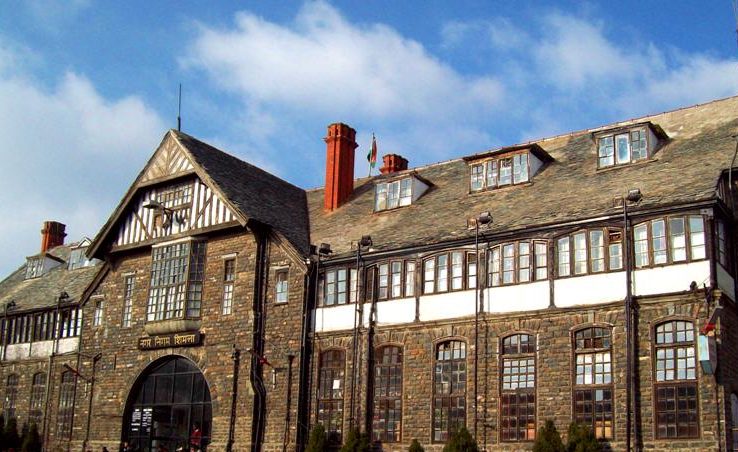
Shimla is the capital city of the Indian state of Himachal Pradesh and the largest city in the state. It is located in the lower Himalayan region and is well known for its natural beauty, pleasant climate, and colonial-era architecture. During British rule, Shimla served as the summer capital of India from 1864.
After independence, Shimla became the capital of Punjab and later, in 1971, was declared the capital of Himachal Pradesh. Today, the city is an important administrative, tourism, and education center in North India.
As per the provisional reports of Census India, the population of Shimla city in 2011 was 1,69,578 (1.69 lakh). Based on recent trends, the estimated population of Shimla in 2026 is around 2.50 lakh.
👉 Projected Population of Shimla (2026): ~2.5 lakh
Census Quick Facts
| Category | Census 2011 | 2026 Estimate |
|---|---|---|
| Total Population | 1,69,578 | 2,50,276 |
| Male Population | 93,152 | 1,35,508 |
| Female Population | 76,426 | 1,14,768 |
| Total Area | 36 sq. km | |
| Population Density | 4,800 per sq. km | |
| Average Literacy | 93.63% | |
| Sex Ratio | 820 | |
| Child Sex Ratio | 890 | |
| Children (0–6 Years) | 13,571 |
Source: Census 2011
Key Takeaways (Census 2011)
Shimla had a total population of 1,69,578 in 2011, with 93,152 males and 76,426 females.
The city recorded a high literacy rate of 93.63%, making it one of the most literate cities in India.
The sex ratio stood at 820 females per 1,000 males, while the child sex ratio was 890.
Children aged 0–6 years formed about 8% of the total population.
With an area of 36 sq. km, Shimla had a population density of around 4,800 persons per sq. km.
Shimla Historical Population
Shimla has shown steady population growth over the last century. At the beginning of the 20th century, the population was below 15,000. After independence, the city witnessed rapid urban development, leading to continuous growth.
Between 2001 and 2011, Shimla recorded a growth rate of 18.96%. The population crossed 2 lakh by 2021 and is expected to continue growing moderately in the coming years due to tourism and administrative activities.
Let’s look at population & percentage change from Year 1901 to 2021.
| Year | Population | Actual Change | Percentage Change |
| 1901 | 13,960 | – | – |
| 1911 | 19,405 | 5,445 | 39.00% |
| 1921 | 27,213 | 7,808 | 40.24% |
| 1931 | 18,144 | -9,069 | -33.33% |
| 1941 | 18,348 | 204 | 1.12% |
| 1951 | 46,150 | 27,802 | 151.53% |
| 1961 | 42,597 | -3,553 | -7.70% |
| 1971 | 56,032 | 13,435 | 31.54% |
| 1981 | 71,608 | 15,576 | 27.80% |
| 1991 | 104,533 | 32,925 | 45.98% |
| 2001 | 142,555 | 38,022 | 36.37% |
| 2011 | 169,578 | 27,023 | 18.96% |
| 2021 | 204,000 | 34,422 | 20.30% |
Sources: Census 2011
Shimla District Population
Shimla district is one of the major districts of Himachal Pradesh and ranks among the most populous in the state. As per Census 2011, the population of Shimla district was 8,14,010 (8.14 lakh).
The estimated population of Shimla district in 2026 is around 10 lakh.
| Category | Census 2011 |
|---|---|
| Total Population | 8,14,010 |
| Male Population | 4,25,039 |
| Female Population | 3,80,996 |
| Average Literacy | 83.64% |
| Sex Ratio | 915 |
| Child Sex Ratio | 925 |
Source: Census 2011
Know more about Himachal Pradesh
Pingback:Population of Ludhiana 2020 | Find Easy
Pingback:Population of Srinagar 2020 | Find Easy