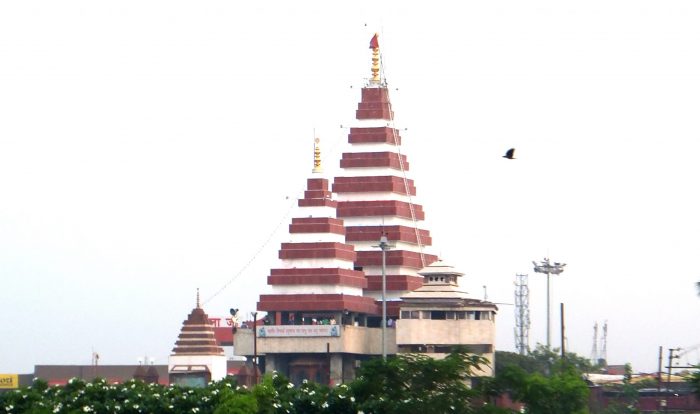
Population of Patna

 > > India >>  States >>  Bihar

Patna is the capital and largest city of the Indian state of Bihar. It is located on the southern bank of the Ganga River and serves as the political, educational, and administrative center of the state. Patna is also one of the oldest continuously inhabited cities in the world. As per provisional reports of Census India, the population of Patna City in 2011 was 16,84,222 (16.84 lakh).

👉 Estimated Population of Patna in 2026: ~23 lakh (2.3 million)

🔗Also read about: Bihar Population and Demography

Patna City – Census 2011

ParticularsDetails
Total Population16,84,222 (16.84 lakh)
Male Population8,89,399
Female Population7,90,823
Density of Population6,737 per sq. km
Average Literacy (%)83.37%
% of Male Literates87.35%
% of Female Literates78.89%
Sex Ratio885
Child Sex Ratio877
Children (0–6 years)2,03,041

Source: Census 2011

Census 2011 – Key Takeaways (Patna City)

  • Patna City had a total population of 16.84 lakh in 2011.

  • The male population was 8.89 lakh, while females numbered 7.91 lakh.

  • The city recorded a high population density of 6,737 persons per sq. km.

  • The overall literacy rate stood at 83.37%, with male literacy at 87.35% and female literacy at 78.89%.

  • Patna’s sex ratio was 885 females per 1,000 males, below the national average.

  • Children aged 0–6 years accounted for about 12% of the total population.

Patna Metropolitan Area Population

Patna Metropolitan Area, also known as the Patna Urban Agglomeration, is the 18th largest urban agglomeration in India. It covers an area of around 600 sq. km and includes Patna city along with its surrounding urban areas.

As per the Census of India 2011, the population of Patna Metropolitan Area was 20,49,156 (20.49 lakh), and its estimated population in 2026 is around 30 lakh (3 million).

An urban agglomeration is a continuous urban spread consisting of a city and its adjoining outgrowths or nearby towns.

Patna Population Growth Trend (1901–2021)

As per Census 2011, Patna recorded a population growth rate of 17.66% during 2001–2011. During 2011–2021, the city was expected to grow at a rate of around 15%, reflecting steady urban expansion.

In 1901, the population of Patna was only about 1.35 lakh, which increased to nearly 20 lakh by 2021. This long-term growth highlights Patna’s transformation into a major metropolitan center in eastern India.

Decadal Population Growth of Patna 

Census YearPopulationAbsolute ChangePercentage Change
1901134,785
1911136,153+1,368+1.01%
1921119,976−16,177−11.88%
1931159,690+39,714+33.10%
1941196,415+36,725+23.00%
1951283,479+87,064+44.33%
1961364,594+81,115+28.61%
1971475,300+110,706+30.36%
1981813,963+338,663+71.25%
1991956,417+142,454+17.50%
20011,431,477+475,060+49.67%
20111,684,222+252,745+17.66%
2021 (Est.)1,950,000+265,778+15.78%

Source: Census 2011

Patna District Population

Patna district is one of the 36 districts of Bihar and is the most populous district in the state. It is also among the fifteen most populous districts in India.

As per Census 2011, Patna district had a population of 5,838,465 (58.38 lakh), including 3,078,512 males and 2,759,953 females. The district recorded an average literacy rate of 70.68%, with a sex ratio of 897 females per 1,000 males.

The estimated population of Patna District in 2026 is around 74 lakh.

Patna District Quick Facts (Census 2011)

CategoryDetails
Total Population5,838,465 (58.38 lakh)
District Area3,202 sq. km
Population Density1,800 per sq. km
Literacy Rate (%)71.92
Sex Ratio897
Child Sex Ratio909

Source: Census 2011

Patna Population 2026 – City & District Census, Growth and Demographics

Rajeev Rana

Rajeev Rana is an independent writer and researcher with a strong interest in history, population studies, and demographic trends in India and North America. He has been writing on demography-related topics for over five years, focusing on census data, migration patterns, ethnicity, and regional population changes. While not a formally certified demographer, Rajeev closely follows official data releases from government sources, census authorities, and reputable research institutions. His work aims to present complex demographic information in a clear, accessible, and neutral manner for readers seeking factual insights and broader context. Rajeev contributes to multiple informational websites and has particular familiarity with demographic and regional trends in the Delhi NCR region. His writing is driven by curiosity, data interpretation, and a commitment to accuracy rather than advocacy or opinion

One thought on “Patna Population 2026 – City & District Census, Growth and Demographics

Leave a Reply