Population of Noida Gangtok

 > > India >>  States >>  Northeast >> Sikkim

Gangtok is the capital city of the Indian state of Sikkim. It’s the largest city in Sikkim. After Sikkim’s integration with the Union of India in 1975,  Gangtok was made India’s 22nd state capital. As per the provisional reports of Census India, the population of  Gangtok City in 2011 was 100,286 (1 lakh)

👉 Projected population of Gangtok in 2026 is 1.25 lakh.

Census 2011 Quick Facts

The initial provisional data released by census India 2011, shows that the density of Gangtok for 2011 is 4766 people per sq. km. Gangtok city administers area is 141 sq. km

Gangtok CityTotalMaleFemale
Population (Census 2011)100,28652,45947,827
Children (0-6)9,2644,7964,468
Average Literacy (%)89.33 %92.77 %85.54 %
Sex ratio912 
Child Sex ratio932 

Gangtok Historical Population

As per Census 2011, Gangtok has a population growth rate of 129.43% during 2001-2011.  It’s expected to have a population growth rate of 15% during 2011-2021.

Let’s look at population & percentage change from  Year 19o1 to 2021.

YearPopulationActual ChangePercentage Change
19512,744
19616,8484,104149.56%
197113,3086,46094.33%
198136,74723,439176.13%
199125,024-11,723-31.90%
200143,71118,68774.68%
2011100,28656,575129.43%
2021115,00014,71414.67%

Sources: Census 2011

Religion in Gangtok

Hinduism and Buddhism are the most significant religions in Gangtok.[It also has a sizeable Christian population and a small Muslim minority.

ReligionPercent
Hinduism 58.81%
Buddhism 28.15%
Christianity  9.07%
Islam 3.14%
Others0.83%

Languages in Sikkim

Nepali is the most widely spoken language in Sikkim as well as Gangtok. English and Hindi are also widely spoken and understood in most of Sikkim, particularly in Gangtok. Other languages spoken in Gangtok include Bhutia (Sikkimese), Tibetan, and Lepcha.
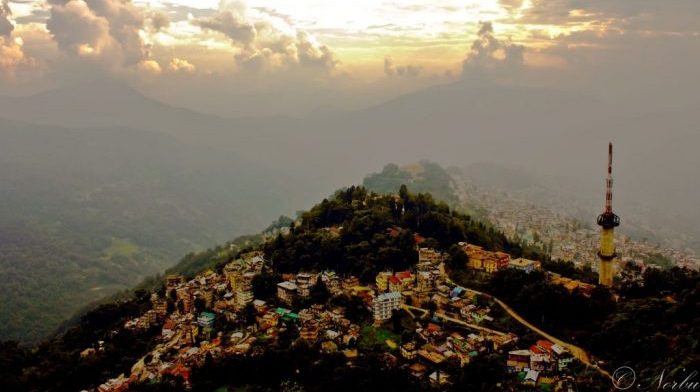
Gangtok Population 2026 : Census 2011, Religion & Demography

Rajeev Rana

Rajeev Rana is an independent writer and researcher with a strong interest in history, population studies, and demographic trends in India and North America. He has been writing on demography-related topics for over five years, focusing on census data, migration patterns, ethnicity, and regional population changes. While not a formally certified demographer, Rajeev closely follows official data releases from government sources, census authorities, and reputable research institutions. His work aims to present complex demographic information in a clear, accessible, and neutral manner for readers seeking factual insights and broader context. Rajeev contributes to multiple informational websites and has particular familiarity with demographic and regional trends in the Delhi NCR region. His writing is driven by curiosity, data interpretation, and a commitment to accuracy rather than advocacy or opinion