
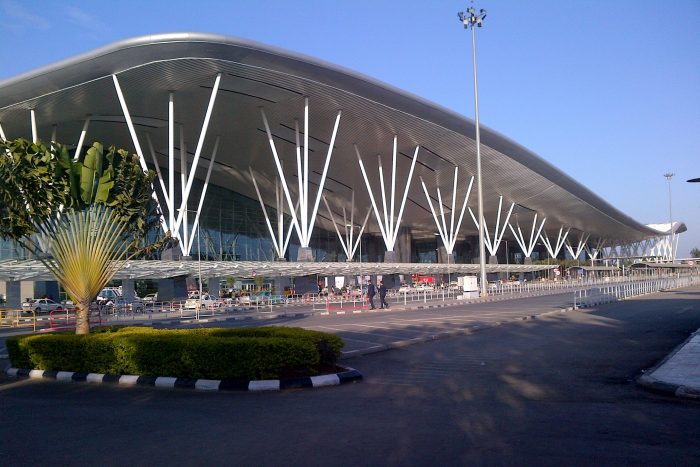
Bengaluru, formerly known as Bangalore, is the capital city of Karnataka and one of India’s fastest-growing metropolitan centers. Located on the Deccan Plateau at an elevation of over 900 meters, it enjoys a relatively moderate climate compared to many other major cities.
Often called the “Silicon Valley of India,” Bengaluru is a major hub for information technology, startups, education, and research. It is among the most populous cities in the country and plays a key role in India’s economy.
As per Census 2011, Bengaluru had a population of 84.43 lakh. Due to rapid migration, urban expansion, and economic growth, the city has continued to grow at a very high pace.
👉 Projected Population of Bangalore (2026): ~1 crore (10 million)
Population of Bangalore (Census 2011)
| Category | Total | Male | Female |
|---|---|---|---|
| Population | 84,43,675 | 43,91,723 | 40,51,952 |
| Children (0–6) | 9,16,441 | 4,71,842 | 4,44,599 |
| Literacy Rate | 88.71% | 91.71% | 85.44% |
| Sex Ratio | 923 | – | – |
| Child Sex Ratio | 942 | – | – |
| Density | ~11,000 per sq. km | – | – |
Source: Census 2011
Key Census 2011 Highlights
City Area: 741 sq. km
Population Density: ~11,000 persons per sq. km
Average Literacy Rate: 88.71%
Children (0–6 years): 10.85% of total population
Overall Sex Ratio: 923 females per 1000 males
Child Sex Ratio: 942 girls per 1000 boys
Bengaluru combines high literacy with intense population pressure due to migration from across India.
Bangalore Metropolitan Population
Bangalore Metropolitan region is and fifth-most populous urban agglomeration in India. Bangalore Metropolitan Region (BMR) comprises urban areas of Bangalore Urban district, Bangalore Rural District and Ramanagara District.
Urban Agglomeration Population: ~85.20 lakh
Includes: Bengaluru Urban, Bengaluru Rural, and Ramanagara areas
Estimated Population (2026): ~1.10 crore
Religion in Bangalore
Hinduism is the majority religion in Bangalore city, with 78.87% of the population following it. Islam is the second most popular religion in the city, with approximately 13.90% of the population following it.
Christianity has a following of 5.61%, followed by Jainism at 0.97%, Sikhism at 0.15%, and Buddhism at 0.06%. Around 0.01% of the population follow ‘Other Religions’, and approximately 0.44% of the population do not follow any particular religion.
Religion percentage in Bangalore
| Religion | Percentage |
| Hindu | 78.87% |
| Muslims | 13.90% |
| Christian | 5.61% |
| Jain | 0.97% |
| Sikh | 0.15% |
| Buddhist | 0.06% |
| Others | 0.01% |
| Not Stated | 0.44% |
source: census 2011
Bangalore Historical Population
| Census Year | Population | Absolute Change | Percentage Change |
| 1901 | 163,091 | – | – |
| 1911 | 189,485 | 26,394 | 16.18% |
| 1921 | 240,054 | 50,569 | 26.69% |
| 1931 | 309,785 | 69,731 | 29.05% |
| 1941 | 410,967 | 101,182 | 32.66% |
| 1951 | 786,343 | 375,376 | 91.34% |
| 1961 | 1,206,961 | 420,618 | 53.49% |
| 1971 | 1,664,208 | 457,247 | 37.88% |
| 1981 | 2,918,920 | 1,254,712 | 75.39% |
| 1991 | 4,126,016 | 1,207,096 | 41.35% |
| 2001 | 5,682,293 | 1,556,277 | 37.72% |
| 2011 | 8,443,675 | 2,761,382 | 48.60% |
Key Takeaways
Bengaluru is Karnataka’s capital and India’s leading IT hub.
Population grew by nearly 49% between 2001–2011.
Literacy rate is close to 89%.
Heavy migration has affected the sex ratio.
Child population share is around 11%.
Growth is driven by technology, services, and education sectors.
Know more about Karnataka
Pingback:Population of India 2022 | Demography of India | Find Easy