
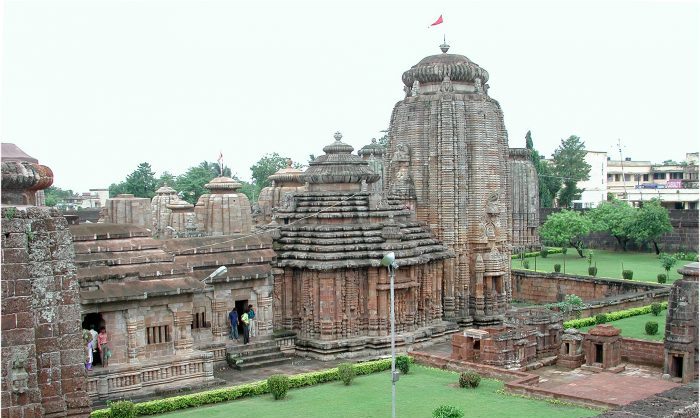
Bhubaneswar is the capital city of the Indian state of Odisha. Known as the “Temple City”, Bhubaneswar is the largest city in Odisha. Bhubaneswar and Cuttack are often referred to as the ‘twin cities of Odisha’. The metropolitan area formed by the two cities had a population of 1.7 million in 2011.
As per the provisional data of the 2011 census, Bhubaneswar City had a population of 8,43,402 (8.43 Lakh) and the Estimated Population of Bhubaneswar in 2026 is 12 lakh or (1.1 million)
Census 2011-2026
| Bhubaneswar City | Census 2011 | 2026 Estimate |
| Total Population | 8,43,402 (8.43 Lakh) | 12 Lakh |
| Male Population | 4,46,204 | 6.3 Lakh |
| Female Population | 3,97,198 | 5.7 Lakh |
Source: Census 2011 and Census Estimates
Key Takeaways
City Area: 135 sq. km
Population Density: 2,131 persons per sq. km
Average Literacy Rate: 91.87% (among the highest in Odisha)
Sex Ratio: 890 females per 1000 males
Child Sex Ratio: 904
Children (0–6 years): 81,847 (9.70% of total population)
Bhubaneswar Historical Population
As per Census 2011, Bhubaneswar has a population growth rate of 29.75% during 2001-2011. It’s expected to have a population growth rate of 20% during 2011-2021.
In the year 1951, the Population of Bhubaneswar is just 16 thousand & it reached 2 lakh by 1980. The growth in the city took place in last 40 years & now it’s estimated around 1 million. Let’s look at population & percentage change from the Year 1951 to 2021.
| Census Year | Population | Actual Change | % Change |
| 1951 | 16,512 | – | – |
| 1961 | 38,211 | 21,699 | 131.41% |
| 1971 | 105,491 | 67,280 | 176.07% |
| 1981 | 219,211 | 113,720 | 107.80% |
| 1991 | 411,542 | 192,331 | 87.74% |
| 2001 | 648,032 | 236,490 | 57.46% |
| 2011 | 840,834 | 192,802 | 29.75% |
| 2021 (estimate) | 1,009,000 | 168,166 | 20.00% |
Sources: Census 2011
Religion in Bhubaneswar
Bhubaneswar is religiously diverse, though Hindus form the overwhelming majority of the population.
| Religion | Percentage |
|---|---|
| Hindu | 95.2% |
| Muslim | 3.29% |
| Christian | 0.92% |
| Sikh | 0.12% |
| Others (Jain, Buddhist, Not Stated) | 0.43% |
The city’s strong Hindu majority is closely linked to its historical and cultural identity as the “Temple City of India,” with landmarks such as the Lingaraj Temple and numerous ancient shrines shaping its religious landscape.
Languages in Bhubaneswar
Odia is the primary language spoken in Bhubaneswar and is used by the vast majority of the population. Due to migration and urban growth, several other languages are also spoken in the city.
| Language | Percentage |
|---|---|
| Odia | 88.4% |
| Hindi | 2.98% |
| Telugu | 2.81% |
| Bengali | 2.01% |
| Urdu | 1.83% |
| Santali | 0.82% |
| Others | 1.12% |
English and Hindi are widely understood, especially in educational institutions, government offices, and the IT sector. Migration from states such as Andhra Pradesh, Bihar, West Bengal, Rajasthan, and Jharkhand has contributed to the city’s linguistic diversity. Rapid growth in the education and IT sectors has also reshaped Bhubaneswar’s demographic composition in recent decades.
Know more about Odisha
Pingback:Population of Visakhapatnam | Find Easy