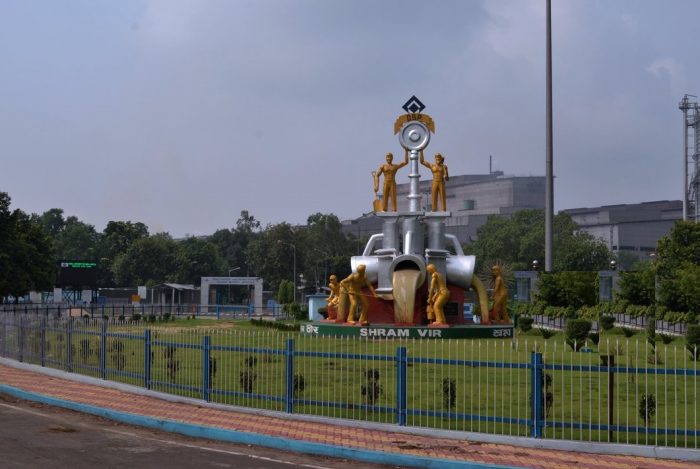
Satna is a major city in the Satna district of Madhya Pradesh, located in central India. It lies about 205 km northeast of Jabalpur and nearly 180 km south of Prayagraj. According to the Census of India 2011, Satna had a population of 280,248 (2.80 lakh), making it one of the important urban centers in the Baghelkhand region.

In recent years, Satna has witnessed steady population growth due to urban expansion, improved connectivity, and industrial activity. By 2026, the city’s population is estimated to be close to 4 lakh.

👉 Projected Population of Satna (2026): ~4.0 lakh

Satna City Census 2011 Data

IndicatorValue
Total Population280,248 (2.80 lakh)
City Area71 sq. km
Population Density3,900 per sq. km
Literacy Rate86.33%
Sex Ratio895
Child Sex Ratio873

Source: Census 2011

⭐ Key Takeaways

  • Satna recorded a population of 2.80 lakh in Census 2011.

  • The city has a high literacy rate (86.33%), above the national average.

  • Population density is 3,900 persons per sq. km, indicating moderate urban pressure.

  • The sex ratio (895) is lower than the national average, showing scope for social improvement.

  • Steady urbanization is contributing to continuous population growth.

Satna District Population

Satna district  is a district of Madhya Pradesh state in central India and located in Northeastern part of Madhya Pradesh. The city of Satna is the district headquarters. The district has an area of 7,502 sq. km, and as per the Census 2011, its population is 22,28,935 (22.29 lakh)

👉 Estimated population of Satna District in 2026 ~ 27 Lakh

Satna DistrictCensus 2011
Total Population2,228,935 (22.29 Lakh)
Male Population1,157,495
Female Population1,071,440
District Area7,502
Density of Population297 per sq. km
Average Literacy (%)72.26%
Sex Ratio926
Child Sex Ratio910

Source: Census 2011

Satna Population 2026 – City & District Census, Growth and Demographics
Rajeev Rana

Rajeev Rana is an independent writer and researcher with a strong interest in history, population studies, and demographic trends in India and North America. He has been writing on demography-related topics for over five years, focusing on census data, migration patterns, ethnicity, and regional population changes. While not a formally certified demographer, Rajeev closely follows official data releases from government sources, census authorities, and reputable research institutions. His work aims to present complex demographic information in a clear, accessible, and neutral manner for readers seeking factual insights and broader context. Rajeev contributes to multiple informational websites and has particular familiarity with demographic and regional trends in the Delhi NCR region. His writing is driven by curiosity, data interpretation, and a commitment to accuracy rather than advocacy or opinion