Population of Pune

Pune is the second-largest city in Maharashtra, India, and one of the most vibrant urban centers in the state. It is a major hub for education, IT, manufacturing, and culture. Along with Pimpri-Chinchwad and nearby cantonment areas, Pune forms a large metropolitan region.

According tothe  Census 2011, Pune had a population of about 31.24 lakh, which is estimated to increase steadily and reach nearly 40 lakh by 2026.

👉 Projected Population of Pune (2026): ~40 Lakh

Pune City: Census 2011

📊 Census 2011 Details

CategoryTotalMaleFemale
Population31,24,45816,03,67515,20,783
Children (0–6)3,37,0621,76,6241,60,438
Literacy Rate (%)89.56%92.31%86.67%
Sex Ratio948
Child Sex Ratio908

Key Takeaways: Pune City Population

• Pune crossed 30 lakh population in 2011, making it one of the largest cities in Maharashtra and India.

• The city has shown strong long-term growth since the 1950s, driven by education, IT, and industrial development.

• A literacy rate of nearly 90% reflects a strong educational infrastructure and human capital.

• High population density of over 9,000 persons per sq. km indicates intense urban concentration.

• The sex ratio remains slightly below the ideal level and needs further social improvement.

• Rapid expansion of the metropolitan region continues to attract migrants from across the country.
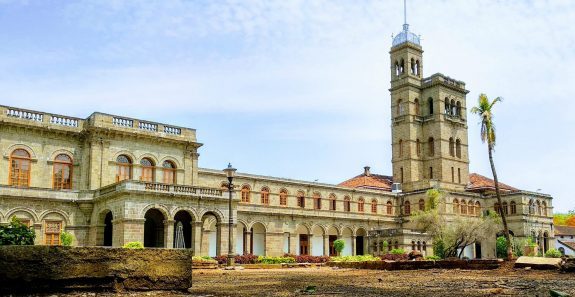
Pune Metropolitan Population

Pune Metropolitan Region is the Urban Agglomeration around the city of Pune. It is spread over 3 talukas of the Pune district. It includes Pune City and Pimpri Chinchwad, and the cantonment areas of Pune, Khadki, and Dehu Road.

As per the 2011 Census, the population of the Pune Metropolitan Region was 50,57,709 (50.57 lakhs), and the Estimated Population of the Pune Metropolitan Region in 2026 is 60 lakhs.

Religion in Pune

Hinduism is the dominant religion in Pune, followed by Islam. The presence of Buddhist, Jain, Christian, and Sikh communities reflects the city’s multicultural and cosmopolitan character.

Religion Percentage in Pune

ReligionPercentage
Hinduism79.43%
Islam11.03%
Buddhism3.94%
Jainism2.45%
Christianity2.17%
Sikhism0.43%
Others0.35%
Not Stated0.20%

Source: Census 2011

Pune Historical Population

As per Census 2011, Pune has a population growth rate of 23.08% during 2001-2011.  Its expected to have population growth rate of 16% during 2011-2021.

In 1901 Population of Pune was 1.53 lakh & Year 2021 its estimated around 6 lakh. Let’s look at population & percentage change from the Year 1901 to 2021.

Census  YearPopulationAbsolute ChangePercentage Change
1901153,320              —            —
1911158,8565,5363.61%
1921198,54339,68724.98%
1931198,078-465-0.23%
1941257,55459,47630.03%
1951491,549233,99590.85%
1961619,247127,69825.98%
1971877,876258,62941.77%
19811,281,594403,71845.99%
19911,753,795472,20136.84%
20012,538,473784,67844.74%
20113,124,458585,98523.08%
2021 (estimated)3,620,000495,54215.86%

Source: Census 2011

Pune Population 2026 – City & Metro, Religion and Demographics

Rajeev Rana

Rajeev Rana is an independent writer and researcher with a strong interest in history, population studies, and demographic trends in India and North America. He has been writing on demography-related topics for over five years, focusing on census data, migration patterns, ethnicity, and regional population changes. While not a formally certified demographer, Rajeev closely follows official data releases from government sources, census authorities, and reputable research institutions. His work aims to present complex demographic information in a clear, accessible, and neutral manner for readers seeking factual insights and broader context. Rajeev contributes to multiple informational websites and has particular familiarity with demographic and regional trends in the Delhi NCR region. His writing is driven by curiosity, data interpretation, and a commitment to accuracy rather than advocacy or opinion

2 thoughts on “Pune Population 2026 – City & Metro, Religion and Demographics

Leave a Reply