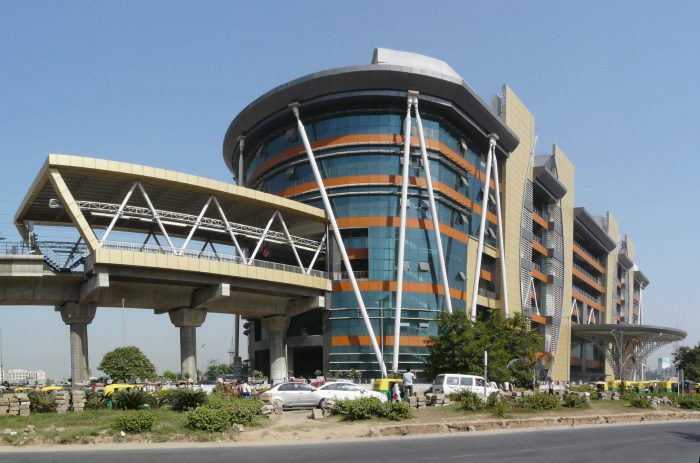
Gurgaon, officially known as Gurugram, is a major city in the Indian state of Haryana. Located about 30 km from New Delhi, it forms an important part of the National Capital Region (NCR) and serves as one of India’s leading corporate and financial hubs.
Over the past two decades, Gurgaon has witnessed rapid urbanization, driven by the growth of IT parks, multinational companies, real estate projects, and modern infrastructure. This has transformed the city into one of the fastest-growing urban centers in northern India.
As per the Census of India 2011, Gurgaon City had a population of 8,76,969 (8.76 lakh). Since then, strong economic activity and large-scale migration have contributed to significant population growth.
Projected Population of Gurgaon City (2026)
Considering the 2011 population of 8.76 lakh, rapid urban expansion, strong job creation, and continued migration, Gurgaon is expected to remain one of the fastest-growing cities in North India.
With an average annual growth rate of around 4% to 5%, the projected population of Gurgaon City in 2026 is:
👉 Approximately 13 lakh to 15 lakh
Census 2011 Population Details
| Category | Total | Male | Female |
|---|---|---|---|
| Population | 8,76,969 | 4,75,032 | 4,01,937 |
| Children (0–6) | 1,11,801 | 60,456 | 51,345 |
| Literacy Rate | 87.52% | 90.93% | 83.50% |
| Sex Ratio | 846 | – | – |
| Child Sex Ratio | 849 | – | – |
| Population Density | 2,463 per sq. km | – | – |
Source: Census 2011
Key Takeaways
Gurgaon is a major corporate and commercial hub in the National Capital Region (NCR).
The city recorded a population of 8.76 lakh in Census 2011.
Literacy rate stood at 87.52%, reflecting strong educational development.
The sex ratio in 2011 was 846 females per 1,000 males, while the child sex ratio was 849.
Children aged 0–6 years formed about 12.75% of the total population.
Projected Population of Gurgaon City (2026): ~13–15 lakh
Religion in Gurgaon
Gurgaon City has a predominantly Hindu population, along with followers of Islam, Sikhism, Christianity, Jainism, and Buddhism. The city’s rapid urbanization has also encouraged cultural diversity and religious coexistence.
Religion-wise Population (Census 2011)
| Religion | Percentage |
|---|---|
| Hindu | 91.88% |
| Muslim | 4.57% |
| Sikh | 1.60% |
| Christian | 0.95% |
| Jain | 0.79% |
| Buddhist | 0.09% |
| Others | 0.03% |
| Not Stated | 0.10% |
Source: Census 2011
Gurugram District Population
Gurugram District (earlier known as Gurgaon District) is one of the most developed districts of Haryana. It includes major urban and semi-urban areas such as Gurgaon, Sohna, Manesar, Pataudi, and Farrukh Nagar.
As per Census 2011, Gurugram District had a population of 15,14,432 (15.14 lakh), including 8,16,690 males and 6,97,742 females. The literacy rate was 84.70%, while the sex ratio stood at 854.
Estimated Population of Gurugram District (2026)
Based on recent growth trends and official projections, the population of Gurugram District in 2026 is estimated to be around 22 lakh.
Population of Major Towns in Gurugram District
Sohna Population
As per Census 2011, Sohna had a population of 1,65,629, including 88,963 males and 76,668 females.
The estimated population of Sohna in 2026 is around 2.20 lakh.
Manesar Population
In 2011, Manesar had a population of 1,16,606, with 65,540 males and 51,606 females.
The estimated population of Manesar in 2026 is around 2 lakh.
Farrukh Nagar Population
As per Census 2011, Farrukh Nagar had a population of 1,34,848, including 70,889 males and 63,959 females.
The estimated population of Farrukh Nagar in 2026 is around 1.80 lakh.
Pataudi Population
In 2011, Pataudi had a population of 1,20,012, with 62,805 males and 52,207 females.
The estimated population of Pataudi in 2026 is around 1.70 lakh.
Know more about Haryana